GO FOR BROKEOpher-Broke · Fall Street · est. 1871Form GFB‑2 The Company & its World
THE FALL STREET JOURNAL — printing since 1888some of it truesome of it plausible and falsesome of it only weatherthe desk never says whichafter hours the wire is quietTHE FALL STREET JOURNAL — printing since 1888some of it truesome of it plausible and falsesome of it only weatherthe desk never says whichafter hours the wire is quiet
Established 1871
The Company
Opher-Broke, of Fall Street, has been in the business of
liquidation since 1871. It keeps honest books, sincere colleagues, and a
basement.
What the Company distributes today is a mobile game. What it has always
distributed is ruin — carefully processed, correctly stamped, and
properly filed. It would like you to fail, and it will watch your progress
with genuine, unhurried interest.
The Company does not explain itself twice. The front page says what the
game is; this page is the one indulgence — the world of Go For Broke
at length, for anyone who cares to read it. Every name, ticker, price and
headline in it is invented. That is not a disclaimer. That is the point.
Two voices, and neither ever winks
Management & Liquidation
The first voiceSincere
Management
Gold-bordered, warmly optimistic, permanently delighted by growth.
Management genuinely wants you to prosper and cannot fathom why you keep
declining to. It frames your profits proudly, in green, and signs its
commendations B. A. It has never doubted a quarterly
projection in its life.
The second voiceWeary
The Liquidation Department
Brief, institutional, signed. Liquidation knows exactly what game this
is and processes your descent with quiet approval — the memos, the
forms, the interstitials, and, at the end, the Notice of Termination.
It does not celebrate. It files. It signs — G.O.
Printing since 1888
The Fall Street Journal
The Company's newspaper of record is older than its telephone and twice
as trusted. Each morning The Fall Street Journal prints an edition:
some of it true, some of it plausible and false, some of it only weather.
Of every eight items, three can be relied upon, three cannot, and two are
simply there. The desk never tells you which is which.
Its columnist, F. Erret, files exactly one confident forward call
each session — a sector, a direction, stated without a flicker of
doubt — and never once reports whether she was right. She gives
nothing away. Learning to read her is the slow game underneath the fast
one, and half-trusting her is the trap.
The same feed, read as tape
The Wire
Beneath everything, all day, runs the Wire: the paper's rumours ticking
past as tape, mechanical and unhurried. It is the morning edition read a
second way — the same words, moving. It moves like a machine, because
it is one; nothing on it bounces. After the market closes it falls quiet,
and says so: — the wire is quiet —
Six floors, and it will move you through all of them
The offices
At this firm you are promoted downward. Lose well and
you are moved from the corner office — where the merely profitable are
kept, in quiet disgrace — floor by floor toward the basement, where
the properly ruined are, at last, at home. Changing offices is an event.
The building feels it.
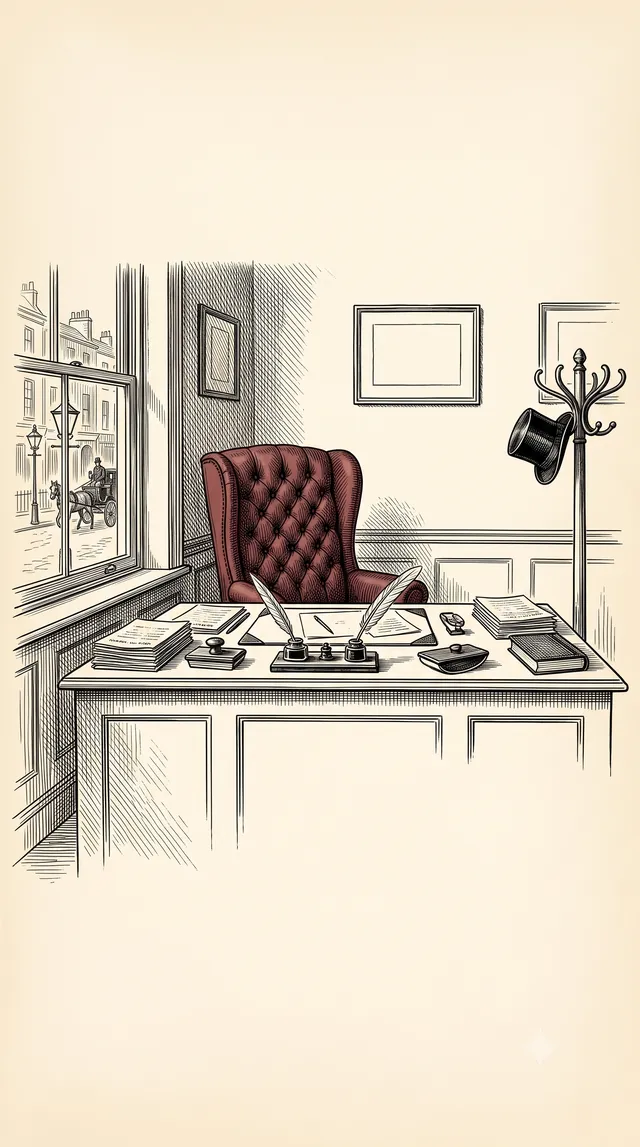
Floor OneThe Corner Office
Where you begin, and where the profitable are quietly ashamed.
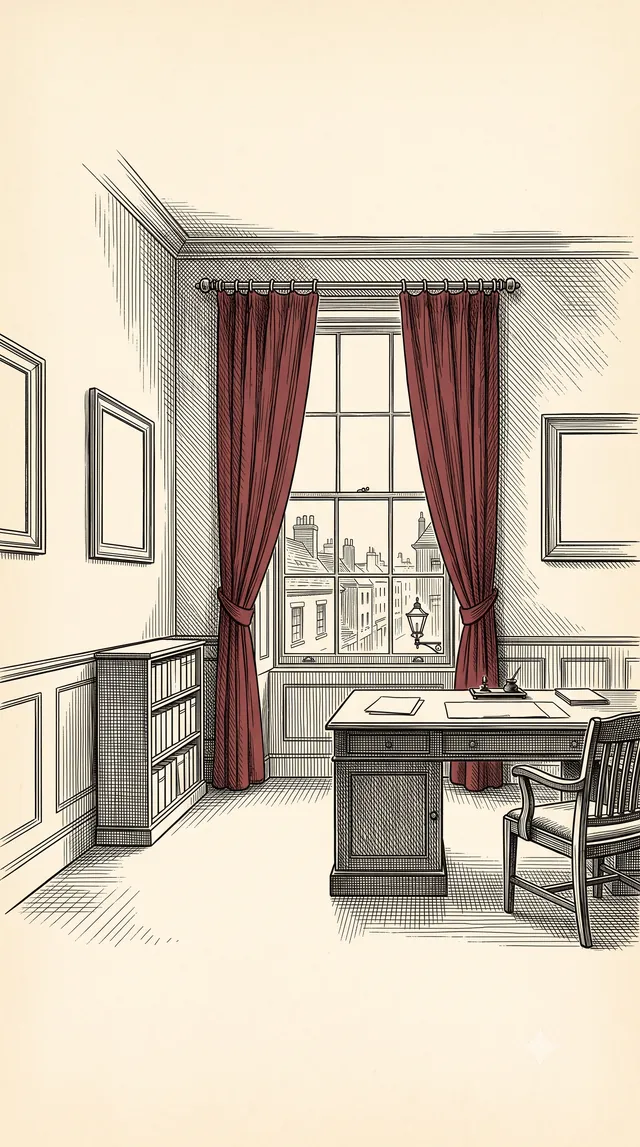
Floor TwoThe Window Office
A view of Fall Street, and a good deal further to fall.
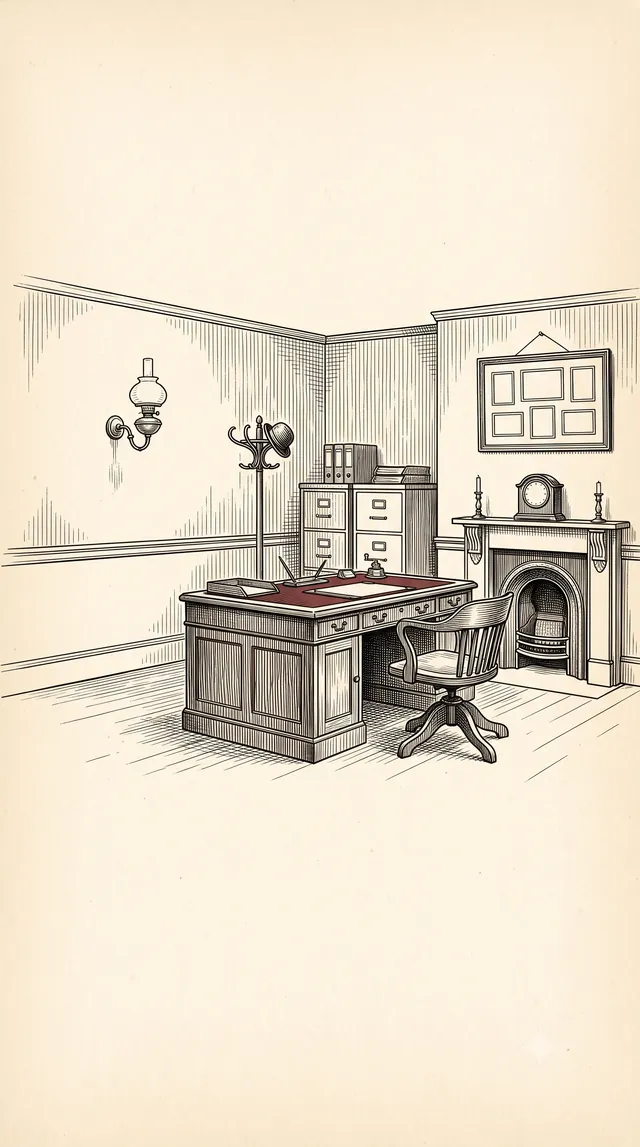
Floor ThreeThe Interior Office
No window now. The fireplace is a kindness.
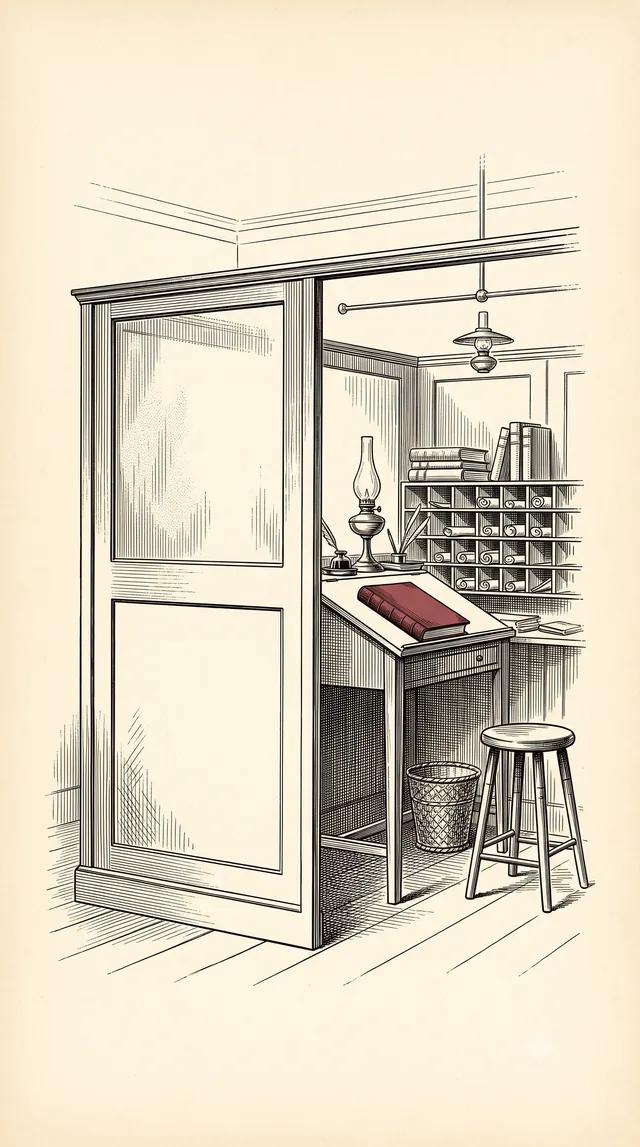
Floor FourThe Clerk’s Cubicle
A ledger, a stool, a lamp. The work is closer here.
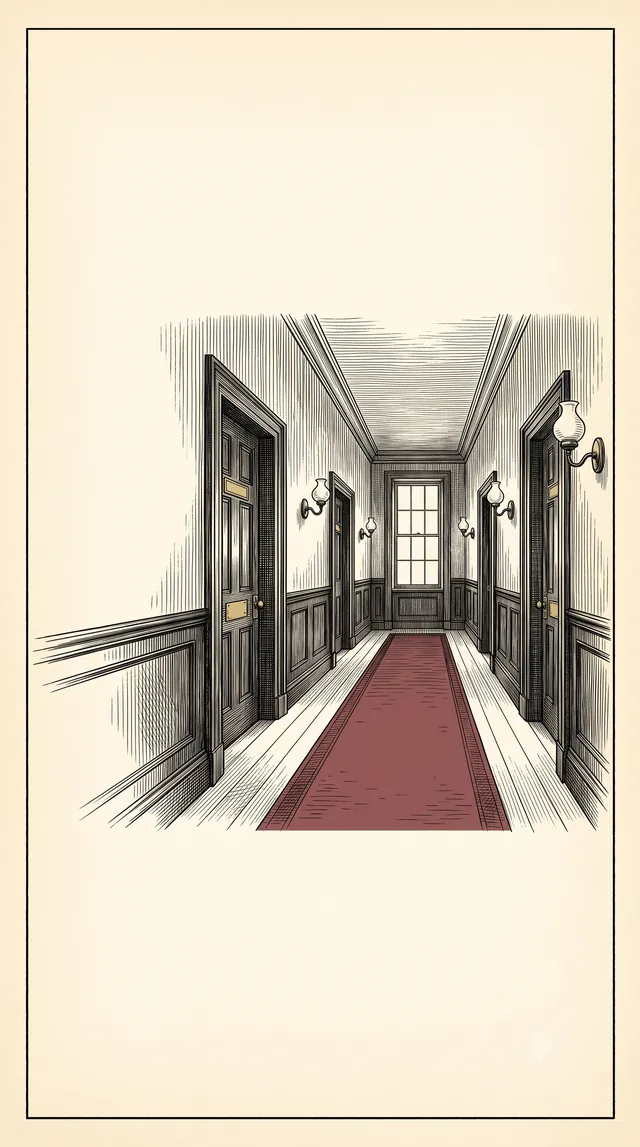
The StairThe Back Corridor
The runner leads one way, and it is not up.
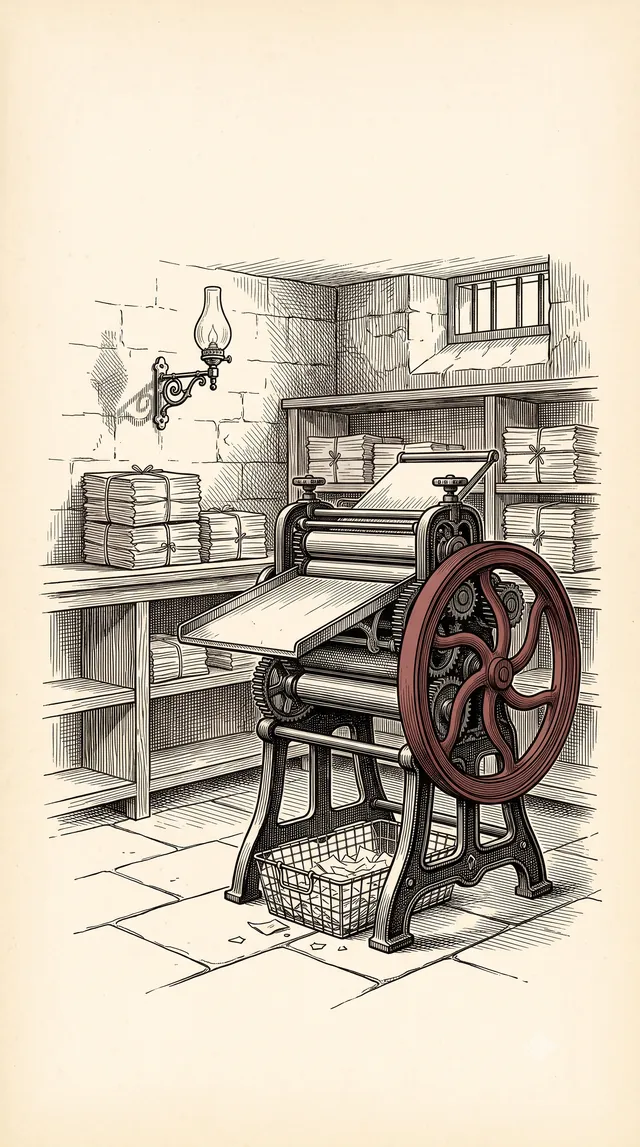
The BasementThe Shredder Room
The machine. Home.
In the basement stands the machine
The machine
Feed it gently. The machine pays out — and then, should you grow
greedy and reach for too much, it reverses without ceremony and hands
your losses straight back to you, undoing your good work at a stroke.
The Company installed it for your benefit. It watches, sincerely, to see
whether you are able to leave well enough alone. Most employees are not.
That is rather the idea.
The market is fictional. The paper more so. Go for broke.